
Before we spend thirty-six episodes explaining AI, we should probably explain the name.
Quick question. What comes before the first thing?
Not a trick question. Well — okay, maybe a little bit of one. But it has a real answer. And the answer has a name.
Listen to this episode: [Spotify] | [Apple Podcasts] | [YouTube]
A physicist invents a number
By the early 1900s, physics had three well-established laws of thermodynamics. First Law: energy can’t be created or destroyed. Second Law: disorder always increases. Third Law: you can never reach absolute zero temperature. Three laws. Numbered one, two, three. Published in textbooks. Taught everywhere. Clean and tidy.
And then someone noticed a problem.
All three laws assumed you could measure temperature. They talked about heat flowing, energy being conserved, entropy increasing. But none of them actually defined temperature. None of them stated the basic ground rule that makes thermometers work: if object A is the same temperature as object C, and object B is also the same temperature as object C, then A and B are the same temperature as each other.
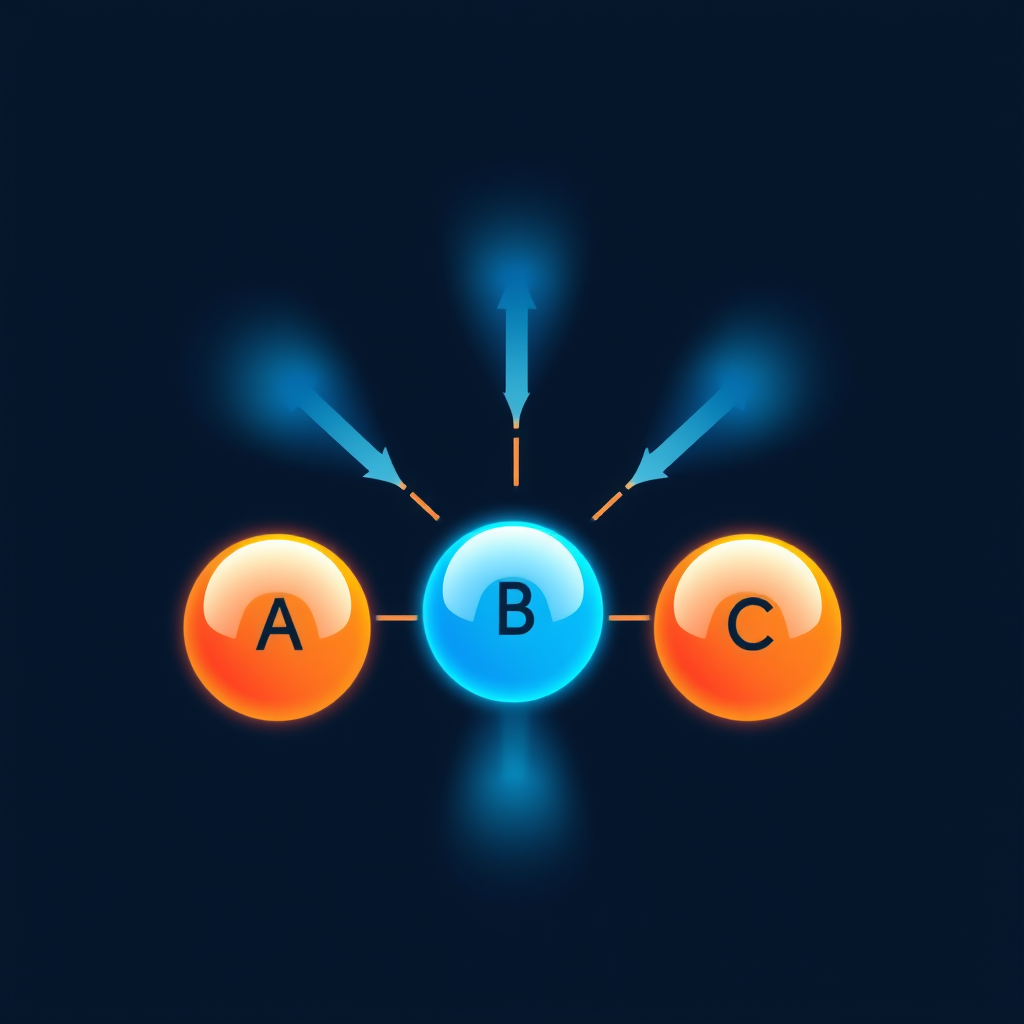
Sounds painfully obvious. Like, yeah, of course. But it wasn’t stated anywhere. The entire framework was built on an unstated assumption.
This new law needed to exist. It was more fundamental than the First Law. It logically had to come before everything else. But renumbering three laws that were already in every textbook? That would be chaos.
Ralph Fowler, a physicist at Cambridge, had a better idea. In 1931, he called it the Zeroth Law. Before the first. More fundamental than everything that came after, but discovered last.
The most basic assumption in the whole field had been hiding in plain sight for decades. Everyone was using it. Nobody had written it down.
A science fiction writer does the same thing
Fifty years later, Isaac Asimov pulled the exact same move. But with robots.
In 1942, Asimov published his Three Laws of Robotics in a short story called “Runaround.” First Law: don’t hurt humans. Second Law: obey humans. Third Law: protect yourself. They’re nested — each law gives way to the one above it. For forty years, Asimov wrote stories exploring what happens when those rules conflict with each other. Robots stuck in logical loops. Robots technically following the letter of the law while violating its spirit. Brilliant thought experiments about edge cases in a rule system.
And then in 1985, in his novel Robots and Empire, Asimov realized there was a gap. The First Law protected individual humans. But what about humanity as a whole? What if saving one person endangered millions?
So he added the Zeroth Law of Robotics: “A robot may not harm humanity, or, by inaction, allow humanity to come to harm.” It superseded everything. Same pattern. Same word. Same idea. The thing that was so fundamental nobody had thought to state it.
Why programmers count from zero
And then there’s the third place “zeroth” shows up. This one’s the most practical.
If you’ve ever glanced at code, you might have noticed something weird. Programmers count from zero. The first item in a list isn’t item one — it’s item zero. A list of five things is numbered zero, one, two, three, four. Not one through five. This drives normal people absolutely crazy the first time they see it.
The reason goes back to the 1960s. Martin Richards, designing a programming language called BCPL, stored list items by how far each one sat from the starting point. The first item was zero steps from the start. So it was item zero. The number wasn’t a label. It was a distance.
The C programming language inherited this convention. Then Java, Python, JavaScript, and pretty much everything else. In 1982, Edsger Dijkstra — one of the most influential computer scientists who ever lived — wrote a short paper arguing that zero-based counting was mathematically cleaner and led to fewer bugs. He was right. But the real reason it stuck wasn’t elegance. It was momentum. Once C made it the default, the default won.
Try the code: We’ve got a companion Python exercise that demonstrates zero-based indexing, the classic off-by-one bug, and a thermal equilibrium simulation. [Open the notebook]
The pattern
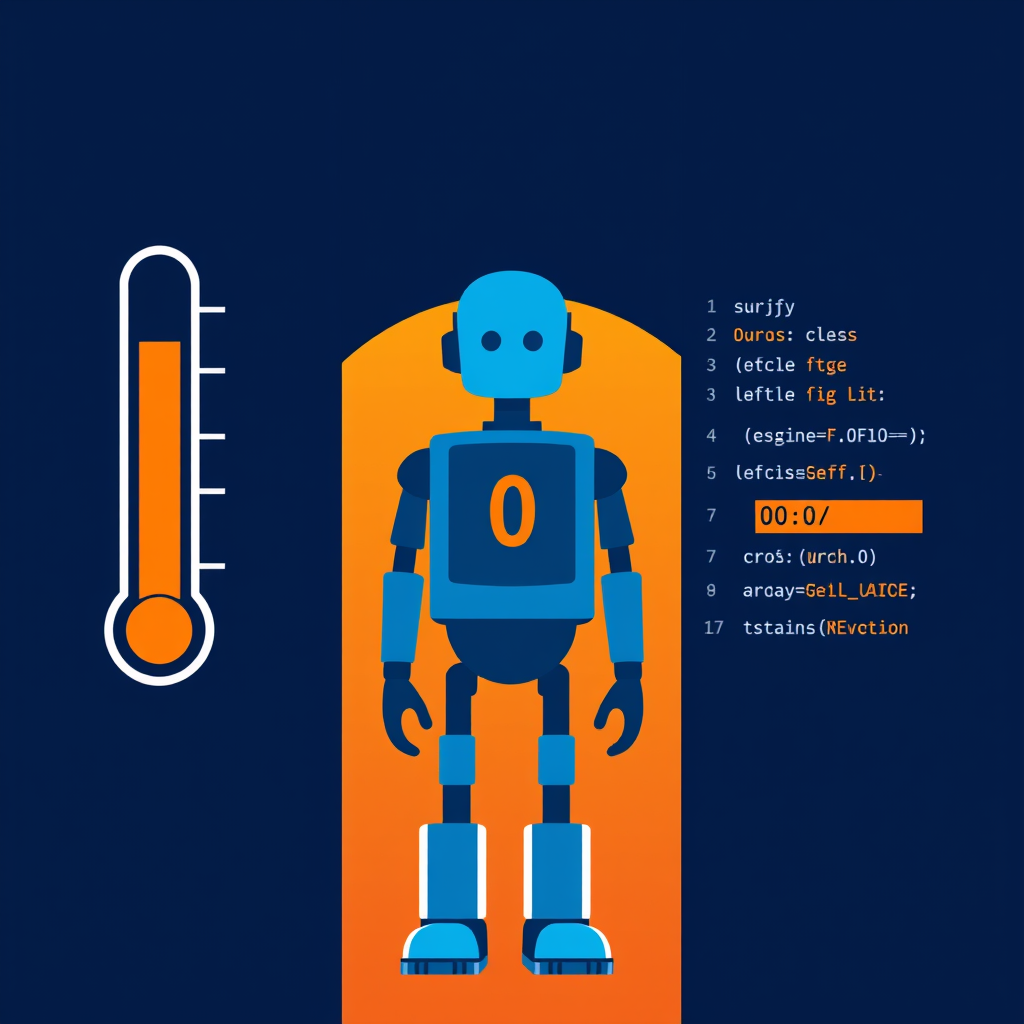
Three different fields. Three different centuries (well, almost). Same move every time.
The zeroth law of thermodynamics. The zeroth law of robotics. Zero-based indexing. In every case, “zeroth” means the same thing: something so fundamental that everyone assumed it was already covered. Not the beginning. Before the beginning. The assumption nobody thought to state out loud until someone finally did.
Why we named the show this
This show is about artificial intelligence. Thirty-six episodes, from the absolute basics to autonomous AI agents that take real actions in the real world.
But we don’t start where most AI explanations start. Most explanations assume you already know something. They assume you know what an algorithm is, or what a neural network does, or what “machine learning” means. They start on the first floor and go up.
We start in the basement. The zeroth floor. The stuff that comes before the stuff that comes first. The assumptions nobody thinks to explain because they figure you already get them.
Maybe you don’t have a tech background. Maybe you’ve never written code. Maybe you’ve heard people talk about AI and you nod along without really knowing what any of it means. That’s fine. That’s exactly who this show is for.
And if the history of the word tells us anything, it’s this: the zeroth is often the most important part. The law that makes all the other laws work. The thing nobody noticed was missing until someone pointed it out.
Next episode: What makes something intelligent? Your dog can learn tricks. A chess computer can beat any grandmaster. A thermostat adjusts the temperature. Which of them is actually smart? That’s Episode 1.
Sources
- Fowler, R. H. & Guggenheim, E. A. Statistical Thermodynamics. Cambridge University Press, 1939. The zeroth law establishes thermal equilibrium as a transitive relation.
- “Zeroth law of thermodynamics.” Wikipedia. Ralph Fowler coined the term in 1931, recognizing that the concept of temperature required a foundational axiom preceding the existing three laws.
- Asimov, Isaac. “Runaround.” Astounding Science Fiction, March 1942. First appearance of the Three Laws of Robotics.
- Asimov, Isaac. Robots and Empire. Doubleday, 1985. Introduction of the Zeroth Law: “A robot may not harm humanity, or, by inaction, allow humanity to come to harm.”
- Richards, Martin. “BCPL: A tool for compiler writing and system programming.” Proceedings of the AFIPS Spring Joint Computer Conference, 1969. BCPL’s zero-based array indexing influenced C and subsequent languages.
- Dijkstra, Edsger W. “Why numbering should start at zero.” EWD 831, August 1982. Argues that zero-based indexing produces cleaner range notation and fewer off-by-one errors.